
My Neighbours Left a Third Note About the Barking. This Little Collar Is the Reason There Was Never a Fourth.
I was one complaint away from a conversation with my landlord — until a €49.99 training collar my trainer had never even mentioned quietly fixed what a year of advice couldn't.
The first note was almost polite. "Could you please keep your dog quiet during the day? Some of us work from home." The second skipped the please. The third one wasn't on my door — it was on the noticeboard in the lobby, for the whole building to read, about "the dog on the third floor."
That dog is Bruno, my beagle mix. He is the sweetest animal I have ever owned, and he barks at everything. The doorbell. The lift. Footsteps in the corridor. A dog two floors down that he has never met. By last autumn I braced myself every time the building made a sound, because I knew what was coming — and I knew the neighbours were counting.
If you live in an apartment with a vocal dog, you know the rest: the strained hellos in the stairwell, the landlord who "wanted a quick word", and underneath it all the low-grade guilt of knowing your dog isn't being bad — he's stressed, and you can't reach him fast enough to help.
Everything I Tried First — and Why None of It Worked
I did not go straight to a collar. I did it the "proper" way first, for the better part of a year.
Shouting made it worse — to Bruno, a raised voice just meant we were barking together now. Treats backfired too: by the time he was quiet enough to reward, I was rewarding the silence after the noise, not the calm I actually wanted. Ignoring it, as one book suggested, mostly trained my neighbours to hate me faster.
A trainer finally explained the real problem in one sentence: apartment barking is a timing problem. The correction has to land in the same second the barking starts. By the time you've crossed the room, the moment is gone. She was right — and completely unhelpful, because no human can sit by the door all day waiting for the doorbell.

So I went down the gadget rabbit hole, and my desk started to look like a pet-shop returns department. Shock collars were off the table before I even started — they're banned across much of the EU, and rightly so. Electricity doesn't teach a dog quiet; it teaches fear, and a fearful dog is not a calmer one. Spray collars need refill cartridges that run out at the worst moment. The ultrasonic box got ignored within a week. Most of this market, I learned, is selling you a way around the problem rather than a solution to it.
The Comparison Guide That Made Me Feel Stupid for Waiting
The turning point was a buyer's guide that lined up five very different collars — a famous-brand spray collar costing more than three times as much, a heavy-duty collar for large breeds, even a GPS fence system — and scored them on humane training, fit, everyday usability and price.
The winner, ranked #1 of the 5 compared with a 9.8 editorial value rating, was the cheapest collar in the whole comparison: BarkBliss.
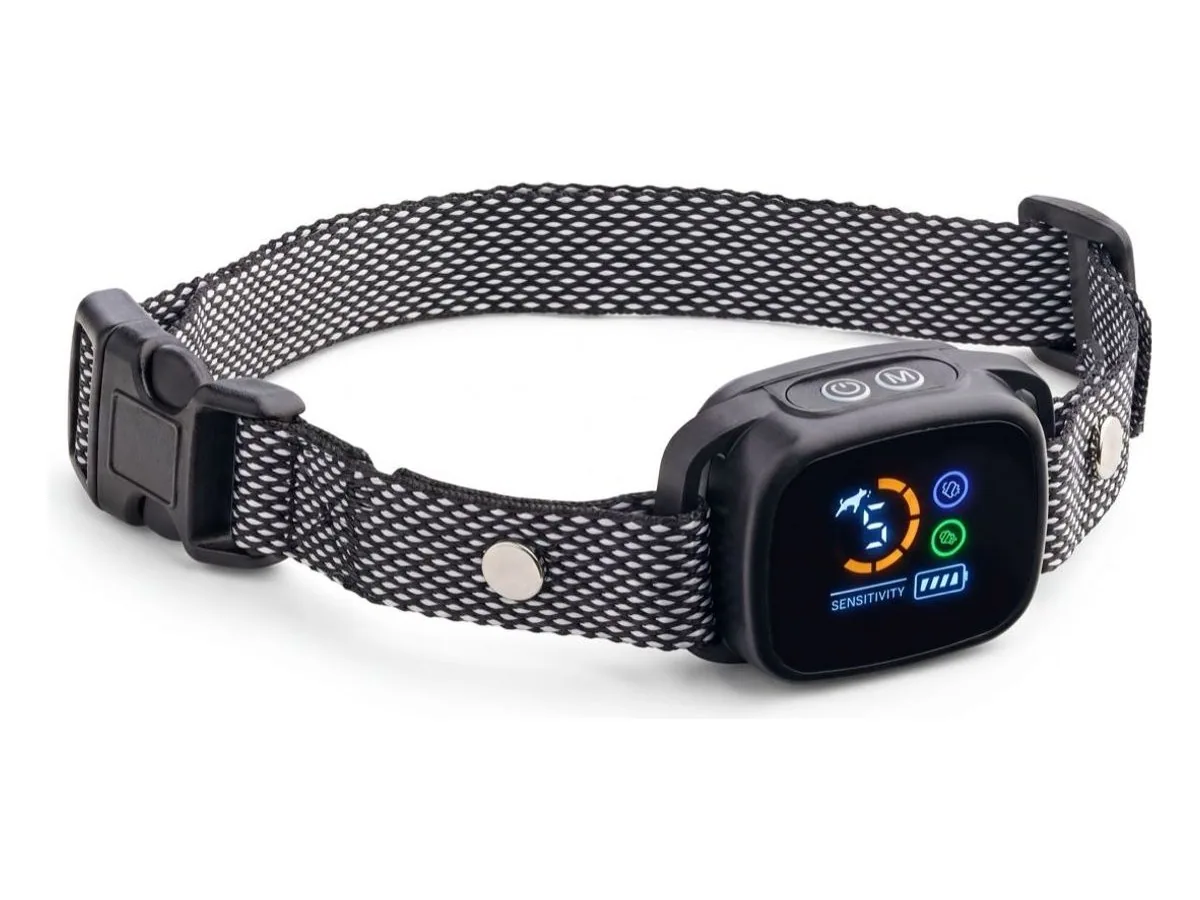
My sceptical brain said cheap gadget. But three things in that review kept nagging at me. First, it was the only collar in the comparison that combined no-shock training, remote operation and a fits-all-breeds strap. Second, the reviewers had verified the price, the discount and the guarantee at the official checkout before publishing — not just copied a product page. Third, there was a 30-day money-back guarantee, with dispatch within 24 hours on working days from the company's own EU warehouse. Worst case, I'd send it back and be exactly where I already was. I ordered one.
How BarkBliss Actually Works on the Barking
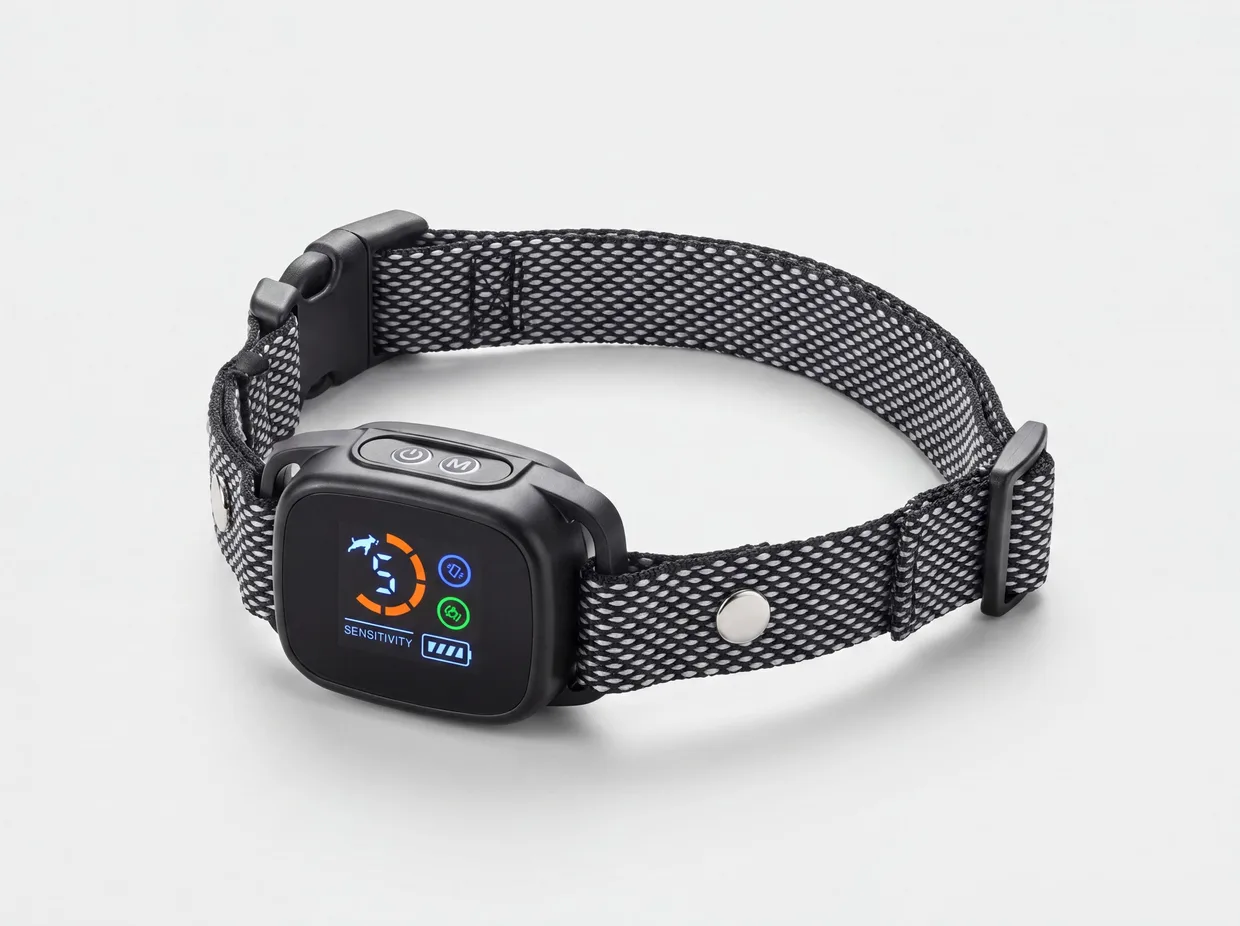
Remember the timing problem? BarkBliss attacks it directly. The instant barking starts, the collar delivers a gentle vibration or sound cue — clear enough that your dog registers it, mild enough that there is nothing to fear. No shock, no pain, no escalation. Just the same calm signal, every single time, which is exactly how dogs learn.
And crucially, you decide when that cue lands. The remote lets you step in from across the room the second the noise starts — from the sofa, the desk, the kitchen with wet hands. A barking fit at the delivery driver? Cue. A single woof at a pigeon? Let it go. You correct exactly the behaviour you want gone and ignore the rest. Here's what that adds up to in practice:
No shock, ever
Vibration and sound modes only — a humane approach that's fully at home in EU countries where shock collars are banned, and one that builds trust instead of fear.
Timing you can actually hit
The remote puts the correction in your hands the moment barking starts — the one thing shouting, treats and every hands-off gadget I tried could never do.
One collar, every dog
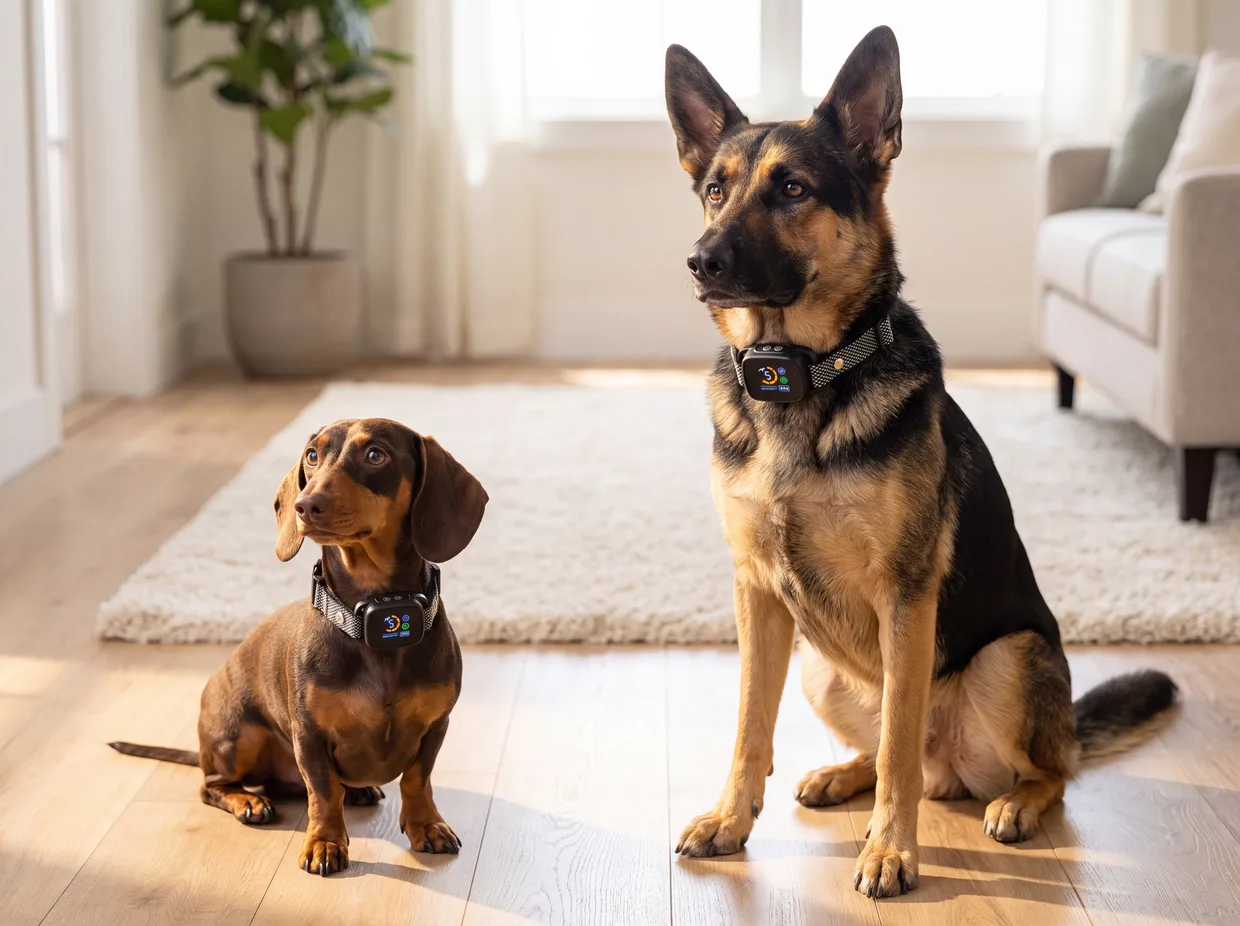
The adjustable strap fits small, medium and large breeds alike. If a second dog ever joins the household, you're not buying a second system.
Charges like your phone
A long-lasting USB-rechargeable battery tops up from any phone charger or laptop. No coin cells to hunt down, no spare batteries to buy, nothing to pack for trips.
Two modes for two temperaments
Switch between vibration and sound to match your dog. Bruno responds to the vibration; my sister's spaniel only ever needed the sound cue.
Built for apartment life
The cue is aimed at your dog, not the whole building. It quietly tackles the doorbell-and-delivery barking that strains neighbour relations in the first place.
Three Weeks In: What Actually Changed
Setup was almost disappointingly quick: charge it, adjust the strap once, done. Bruno scratched at the collar for about two minutes, then forgot it existed.
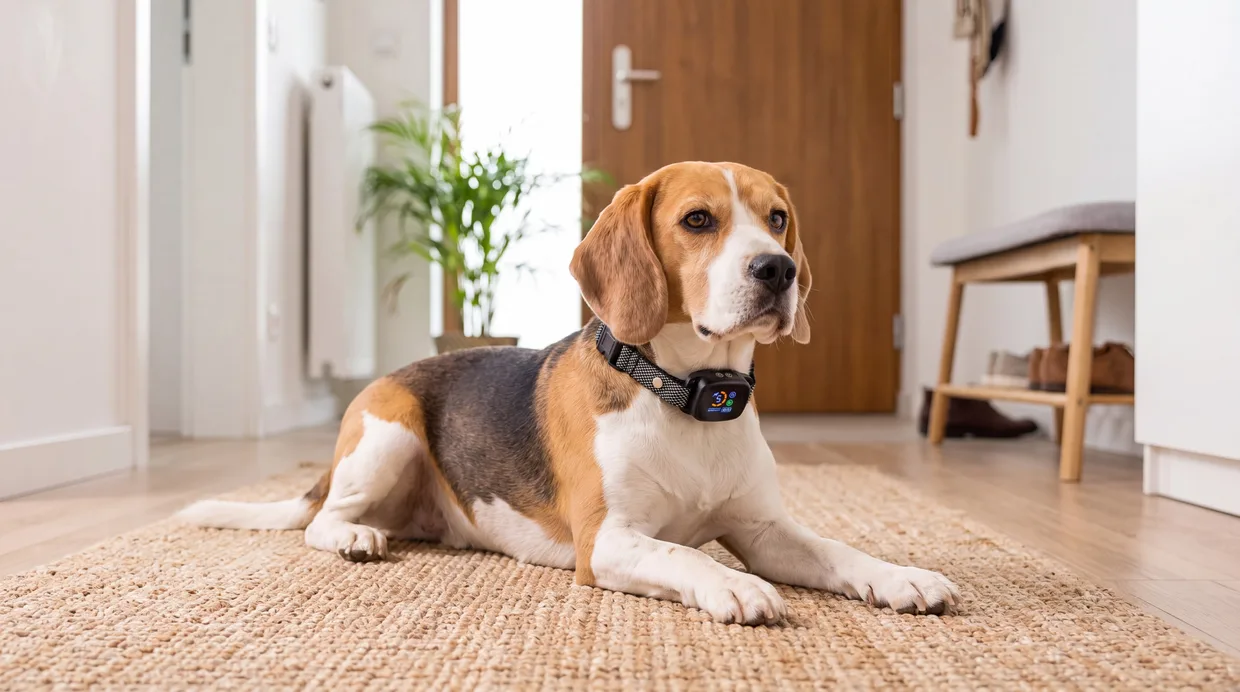
The first doorbell was the test. Bruno erupted as always — and I pressed the cue from the sofa. He stopped, visibly puzzled, looked around, and sat down. Bark, cue, pause. Over the first week the pattern was unmistakable: the pauses kept getting longer, and the eruptions kept getting shorter. Because the cue came from the collar and not from me, he never connected it to my hand on the remote — which matters far more than I realised, because I stayed the good guy in his world the entire time.
By week three, the doorbell got a single alert woof — which I'm fine with; he's still a dog, not a houseplant — and then quiet. The lift, the corridor, the dog two floors down: mostly non-events now. Last Tuesday my downstairs neighbour, author of note number two, stopped me in the stairwell to ask what had happened. That conversation alone was worth the money.
I'm Not the Only One
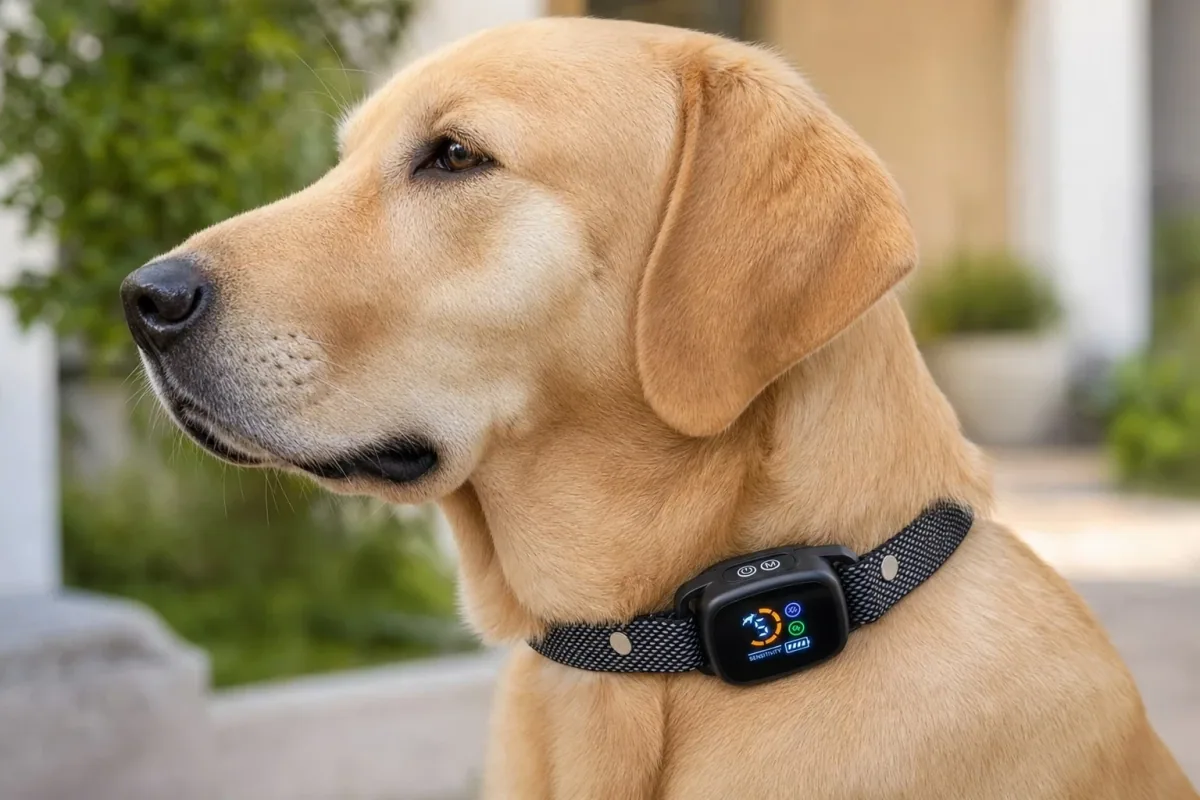
"We'd been warned by our building management twice. Two weeks with this collar and my husband asked if the dog was even home. She's calmer too — that's the part I didn't expect."
— Annika T.
"I refused to put a shock collar on my dog, full stop, so my options felt like zero. The vibration mode is so mild I tested it on my own wrist first. My terrier got the message within days."
— Marco D.
"One collar for our dachshund AND our shepherd mix — I just re-adjust the strap. The remote is the whole trick. You correct the barking the second it starts instead of yelling from another room."
— Claire V.
What It Won't Do (Honesty Corner)
BarkBliss is a training aid, not an off-switch. Expect to invest a few minutes of daily consistency, especially in the first weeks — with the remote, you are an active part of the routine, not a bystander. That's precisely why it works, but if you're hoping for a magic mute button, this isn't it, and neither is anything else. It also won't fix separation anxiety on its own; for us it broke the bark-at-everything reflex, and calm did the rest.
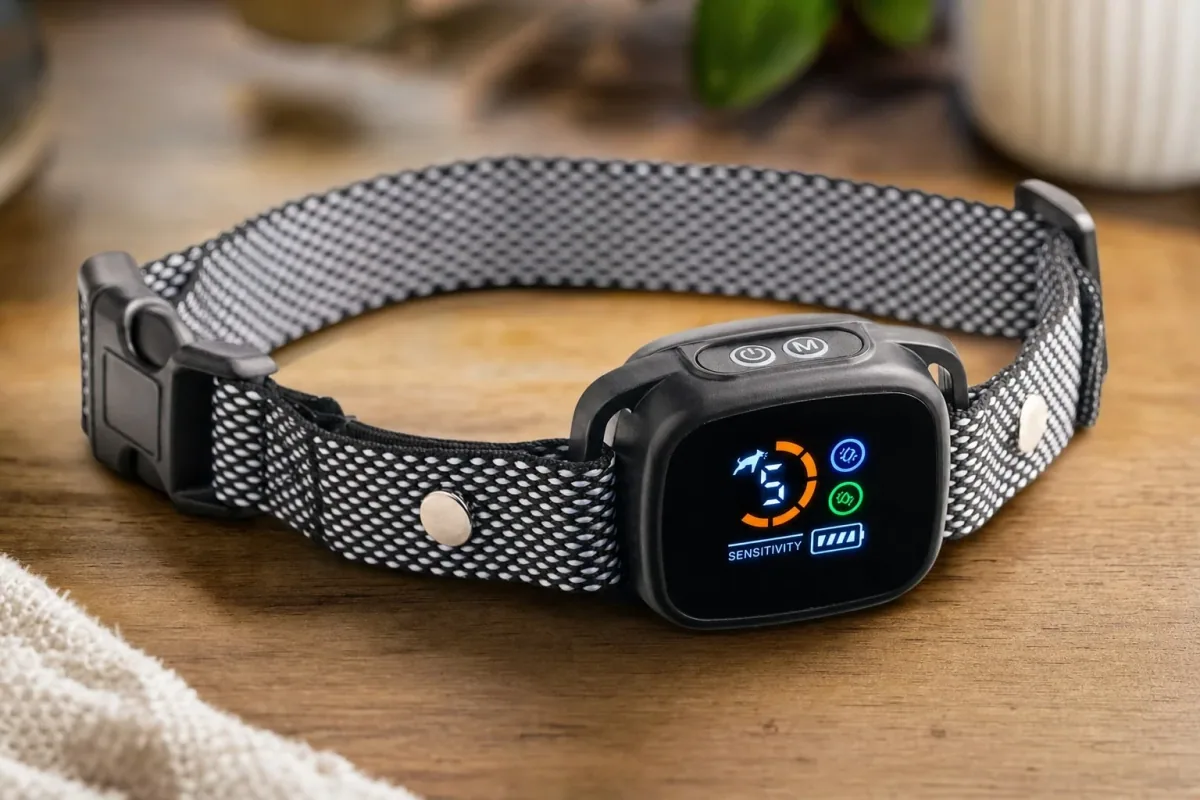
Build-wise, nothing about it feels like a budget product. The strap is sturdy, the buckle clasps with a reassuring snap, and after weeks of door frames and park hedges, ours doesn't have a mark on it.
Questions I Had Before Ordering
How does it stop barking without a shock?
It interrupts barking with a gentle vibration or sound cue instead of electricity. You trigger the cue with the remote the instant barking starts, so your dog learns that staying quiet brings calm — an approach that builds trust rather than fear, and one that's fully legal in EU countries where shock collars are banned.
Will it fit my dog?
BarkBliss is designed to fit all breeds — the strap adjusts for small, medium and large dogs. Fit it snugly but comfortably, pick the mode that suits your dog's temperament, and keep sessions short and consistent. Cueing at the exact moment barking starts is what builds the habit fastest.
What if it doesn't work for my dog?
Every order carries a 30-day money-back guarantee — contact customer service within 30 days of purchase and you'll receive a full refund. Orders dispatch within 24 hours on working days from the company's own EU warehouse, so you're testing it at home within days, not weeks.
Why is it so much cheaper than the big-brand collars?
Two reasons. There's currently a 50% promotion running at the official checkout. And BarkBliss spends its budget on the essentials that actually stop barking — no-shock modes, remote operation, fits-all sizing, USB recharging — not on a famous logo or spray refills you have to keep buying.
The Price Made the Decision Easy
Here's the part that made me feel silly for agonising. The famous-brand spray collar in that comparison costs more than three times as much — and then keeps charging you for refill cartridges. BarkBliss normally sells for €99.99, but with the 50% promotion at the official checkout it's currently €49.99, with free shipping. That's less than I'd spent on refills and failed gadgets before it, and thousands of Germans have apparently done the same maths — it's become one of the most-ordered no-shock collars in Germany.
One honest caveat on the deal: promotional pricing is set by the manufacturer and can change without notice. If the 50% discount is still showing when you reach the checkout, that's the price you'll pay — so if you're on the fence, it's worth checking sooner rather than later. And with the 30-day money-back guarantee, the risk of trying it sits with the manufacturer, not with you.
Three notes about my dog was where my story started. A quiet stairwell hello is where it ended. If your building is starting to write you letters, this is the first thing I'd try — and the only one I've kept.