
My Plants Weren't Dying From Neglect — They Were Dying From Guesswork. One Ten-Second Reading Put a Stop to It
I test garden gear for the Home and Garden Review Desk, and I still lost a fern, two hydrangeas and half a lettuce bed in a single season. So we lined up the leading soil testers side by side to find out which one actually earns a place in the shed — and the winner wasn't the most expensive one. It was the cheapest.
Why did the fern die when I watered it exactly like the care card said? That question followed me around for the best part of a year. I did everything right — the misting, the "water when the top inch feels dry" ritual, the fortnightly feed — and the fern still went crisp at the edges and quietly gave up.
If you're still testing soil with a finger poke and a hopeful guess, I understand completely, because that was me. I fed my hydrangeas twice in one month and watched the leaves get worse after every feed. I moved a sun-hungry pelargonium to the "bright" end of the patio and it sulked for six weeks.
Here's the uncomfortable truth I eventually had to accept: most plants don't die from neglect. They die from care given blind — water poured into soil that was already wet, feed tipped into beds with the wrong pH, sun-lovers parked in corners that only look bright to a human eye.
The fix, it turns out, isn't trying harder. It's checking four numbers before you act.
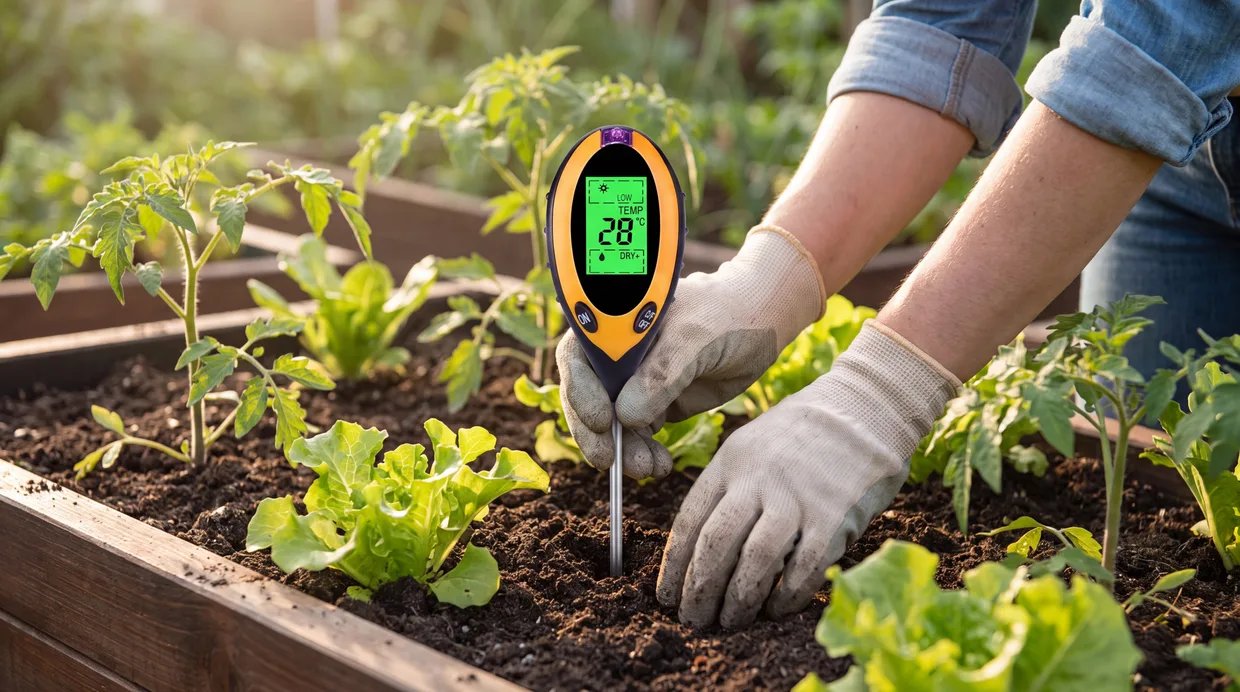
The Four Numbers That Decide Whether a Plant Lives
Moisture at the root zone. The top inch lies. Soil can be crusted dry on the surface and soaking wet where the roots actually sit — which is exactly how conscientious gardeners drown their plants. A reading taken down at root level tells you whether the plant needs water today or is already sitting in it.
pH before you feed. Acid-lovers in an alkaline bed stay hungry no matter how much fertiliser you pour in. My hydrangea problem wasn't a feeding problem at all — it was a pH problem, and every extra feed was money sunk into soil that couldn't pass it on.
Soil temperature before you plant out. Seedlings moved into a bed that's still cold don't "toughen up". They stall. Knowing when beds, pots and greenhouse trays are actually warm enough takes the gamble out of planting-out weekend.
Light, measured — not eyeballed. A corner can look bright to you and still starve a sun-lover, because your eye adjusts and a leaf doesn't. A real light reading shows which spots get enough sun, not just the ones that look cheerful.
Get those four right and most of the failures people put down to a lack of green fingers simply stop happening. The question is what you measure them with.
We Put the Leading Soil Testers Head to Head
At the Review Desk we build these comparisons the boring way: pull the live listings, verify every price on the day we publish, read the buyer feedback in full, and score each tester on what it measures against what it costs. Five testers made the final cut.
The premium pick was an 8-in-1 nutrient analyser at €98.79 — the biggest spec sheet in the test, with NPK analysis on top of the basics, but not a single verified customer review to stand behind it. Next came an IP68 app-connected meter at €68.29: charts on your phone sound lovely, but one solitary review and an app-pairing step between you and your first reading made it a risky spend. The best-known meter brand in the line-up, a TEKCOPLUS 2-in-1, came in at €38.99 — solidly built, but it reads conductivity and temperature only, and it wants manual calibration before you can trust it. And the budget 7-in-1 stick at €31.99 packs in modes but carries a middling 3.9 average rating from buyers, with accuracy complaints a recurring theme.
Then there was the odd one out. One tester read all four of the numbers that actually kill plants, cost less than everything else in the comparison, and carried more verified reviews than the rest of the list combined. It's called SoilSentry, and it took our number-one spot without much of an argument.
I'll be honest: the price made me suspicious. I've tested enough bargain moisture sticks that read "moist" in a jar of dry sand to distrust cheap meters on principle. So before this ranking went anywhere near publication, I took a SoilSentry home for a few weeks and pointed it at my own worst offenders — the replacement fern, the sulking pelargonium, the hydrangea bed that had swallowed two feeds for nothing. The very first reading contradicted everything my watering can thought it knew.
What SoilSentry Actually Does — and Why It Won
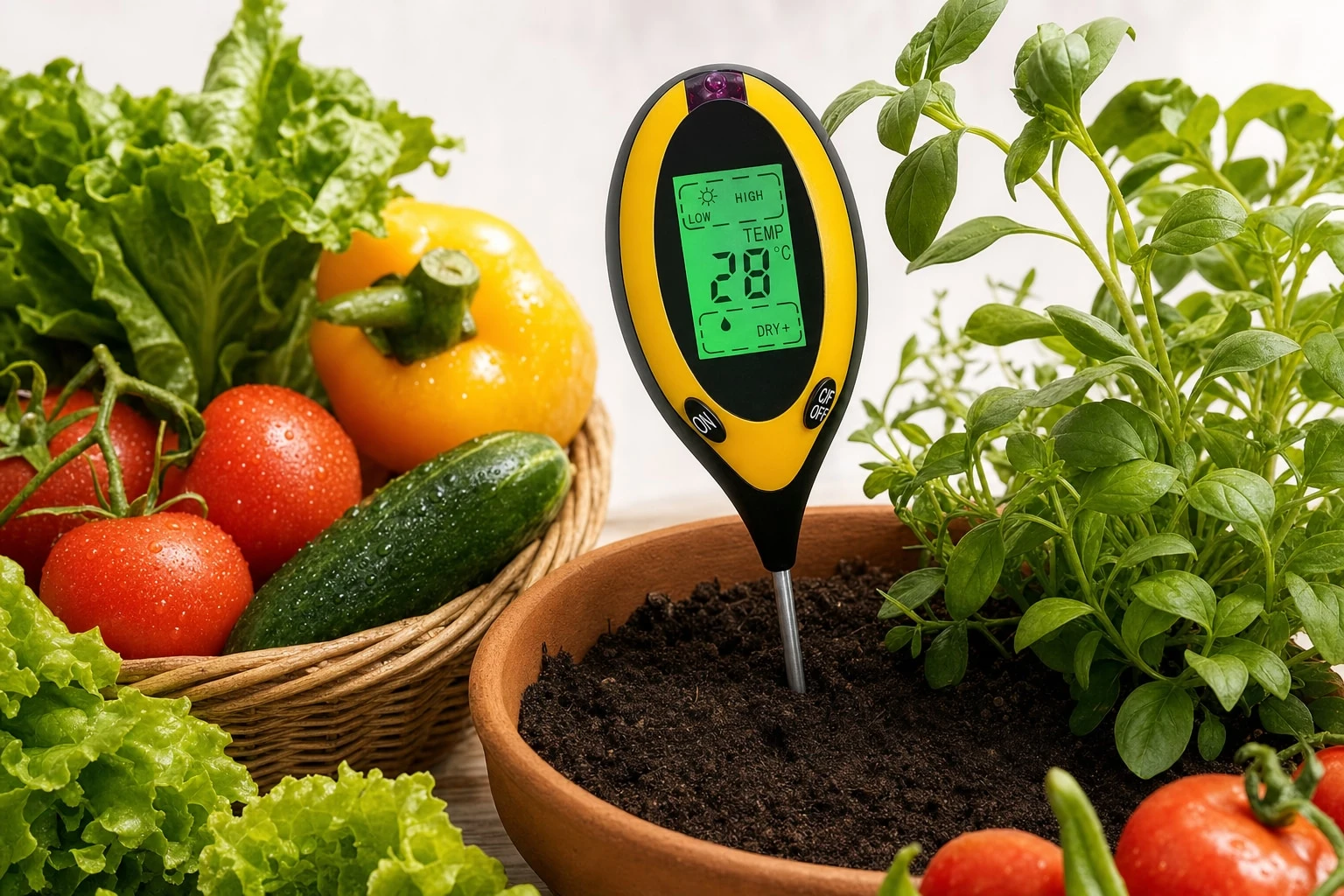
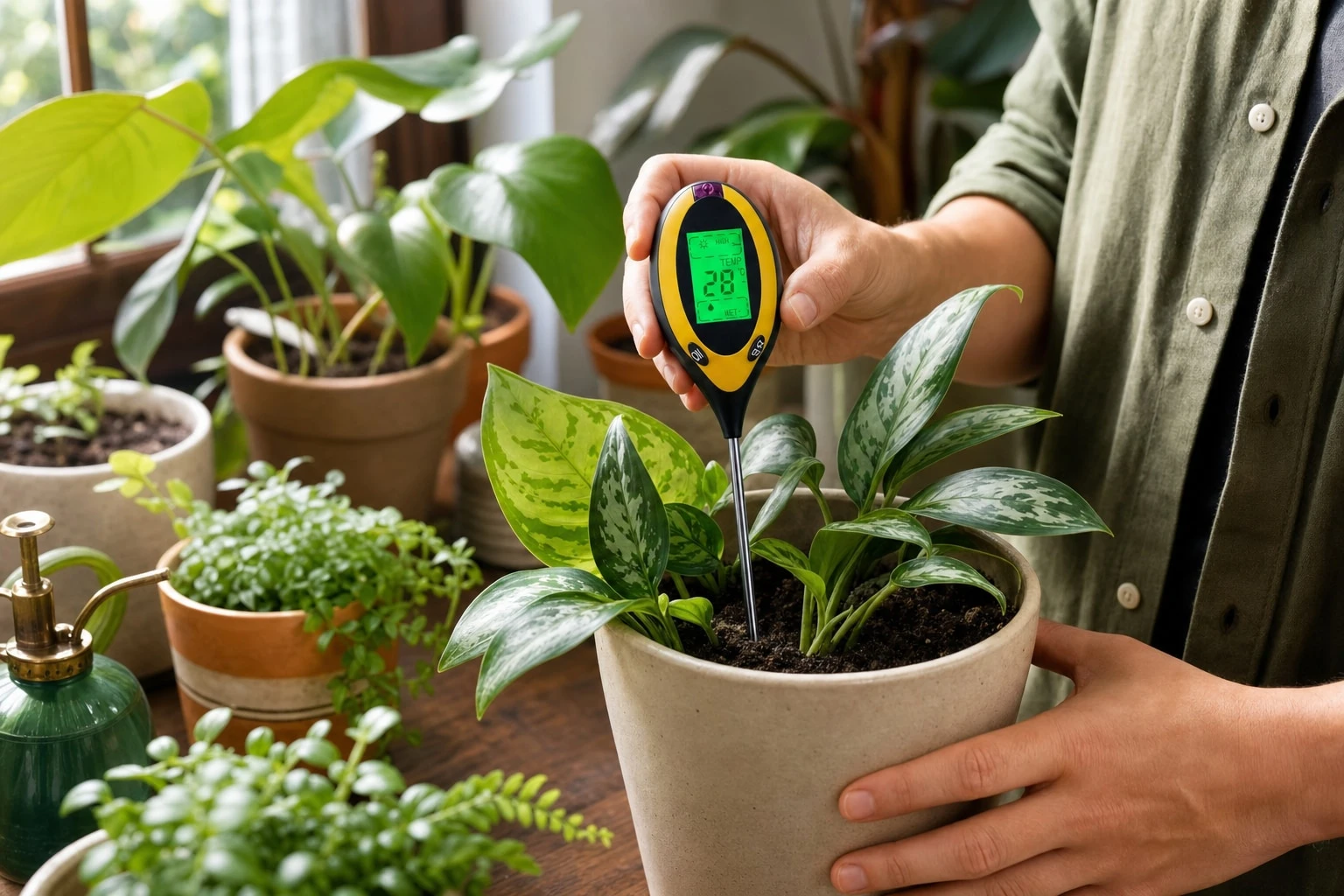
SoilSentry is a 4-in-1 soil tester: pH, moisture, temperature and light intensity from a single probe, on a single readout. You push the probe into the root zone, use the simple controls to pick the reading you want, and act on the answer. The whole routine takes about ten seconds per plant — which is roughly the time I used to spend poking the soil and guessing wrong.
It reads moisture where it matters
Not the deceptive top inch — down where the roots actually sit. For chronic overwaterers (most of us, in my experience), this reading alone pays for the device.
It checks pH before you waste another feed
Match acid-lovers to the right bed, or amend the soil for the plant — either way, you stop pouring fertiliser into a guess. My hydrangeas forgave me within a season.
It puts a number on your light
The light reading settles the "is this windowsill actually bright enough?" argument in seconds. Move the pot once, to a spot the meter approves of, and watch what happens.
It knows when the soil is warm enough
Soil temperature on demand means beds, pots and greenhouse trays get planted when they're ready — not when the calendar says it's probably fine.
There is nothing to learn and nothing that runs out
No test strips, no capsules, no colour charts, no calibration fluids. It's a reusable probe with simple controls, designed so a first-time user gets a reading on the first try — and nothing about it ever needs refilling.
One tool covers every spot you grow in
It's portable and lightweight enough to carry on a watering round, and it works the same way in houseplant pots, planters, raised beds, borders, lawns and greenhouses. The listing rates it suitable for gardens, farms and even labs — the same tool covers Monday's monstera and Saturday's vegetable beds.
To be fair and complete: SoilSentry does not do an NPK nutrient breakdown. If you want lab-style nutrient analysis, the €98.79 analyser keeps that edge — on paper, at least. But that's the only box it doesn't tick, and in years of testing garden kit I've met very few home gardeners who ever open the nutrient modes they paid extra for. The four readings SoilSentry does give you are the four that decide whether a plant lives.
What Owners Keep Telling Us
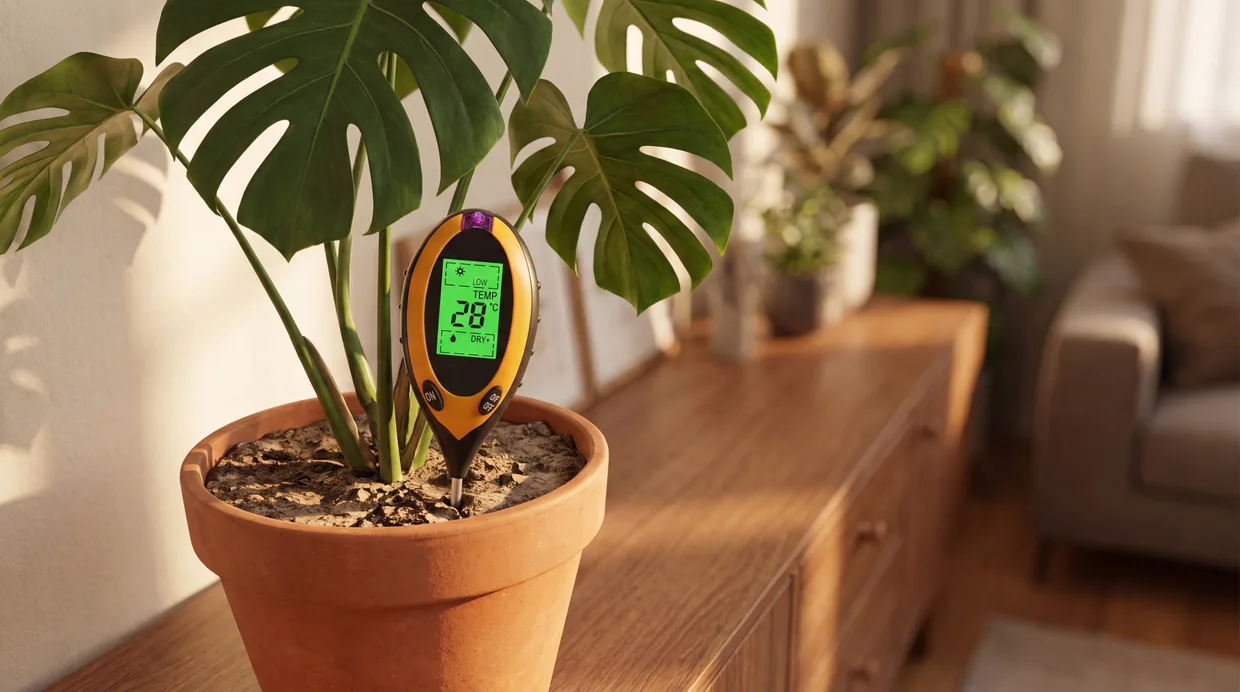
This is the part that separated SoilSentry from the untested spec sheets above it. More than 25,000 customers own one, and it holds a "Great" rating across 5,000-plus verified reviews — the deepest pile of real-buyer proof we found anywhere in the category. The feedback themes are remarkably consistent, and they match my own weeks with the device:
"I genuinely thought I was underwatering. The first reading showed the root zone was soaked. I've killed my last orchid."
— a houseplant owner after her first week
"I moved one pot about a metre, to the spot the light reading pointed at. Three weeks later it looked like a different plant."
— a balcony gardener
"I'm not technical at all. Push it in, read the screen. My grandson set up nothing, because there's nothing to set up."
— an allotment holder in her seventies
The Questions Readers Keep Asking Me
How does it actually work? I have no experience with meters.
None needed. Push the probe into the soil, pick what you want to check — pH, moisture, temperature or light — with the simple controls, and read the result on the display. No chemicals to mix, no charts to squint at. First-time users get a reading on the first try; that's the whole design brief.
Will it work in my pots, raised beds and lawn — or just one type of soil?
Yes. It reads the same way in pots, planters, raised beds, borders, lawns, greenhouse benches and open plots — most owners simply carry it along on the watering round.
Do I need refills, capsules or anything else that runs out?
No. Chemical test kits use up a capsule with every single test; SoilSentry is a reusable device with nothing to repurchase — unlimited readings across every plant you own.
Why is it so much cheaper than lab-grade pH meters?
Two reasons. It's sold directly online rather than through retail middlemen, which strips out the markup. And you're buying one device instead of four — a pH pen, a moisture dial, a thermometer and a light meter each cost money separately, while SoilSentry folds all four into one probe. It doesn't claim lab-grade precision, and for everyday plant care that's the right trade: the price stays sensible while the readings stay useful.
How long does delivery take, and is it tracked?
Orders are dispatched within 24 hours on working days from the brand's own EU warehouse, and every parcel ships with a tracking number you receive by email — so delivery in Germany is quick, and you can follow the parcel to your door.
What if it doesn't work for my garden — can I return it?
Yes. Every order carries a 30-day money-back guarantee: test it in your own pots, beds and plots, and if it isn't for you, contact customer service within 30 days for a full refund. The only thing you commit upfront is the ten seconds per reading.
Now the Price — Because the Price Settled the Ranking
Line the comparison up and the maths writes itself. The nutrient analyser: €98.79, zero reviews. The app meter: €68.29, one review. The two-function brand name: €38.99. Even the shaky budget stick costs €31.99. SoilSentry — the only 4-in-1 in the test, with the deepest review history — currently costs €29.99 instead of the regular €59.99 at the official checkout. That's a 50% discount, applied automatically, no code needed, verified live on the day we published.
The multi-packs are where it gets a little absurd. A 2-pack costs €49.99 — €25 per tester. A 3-pack comes in at €59.99, which works out to €20 each and takes the total discount up to 75%. Put another way: three testers for almost exactly the regular price of one, if you're kitting out a greenhouse or splitting with the neighbours.
Delivery is free, orders dispatch within 24 hours on working days from an EU warehouse, every delivery is tracked, and thousands of Germans have already put one on the potting bench. And the risk sits with the seller, not with you: the 30-day money-back guarantee means a full refund if you're not satisfied.
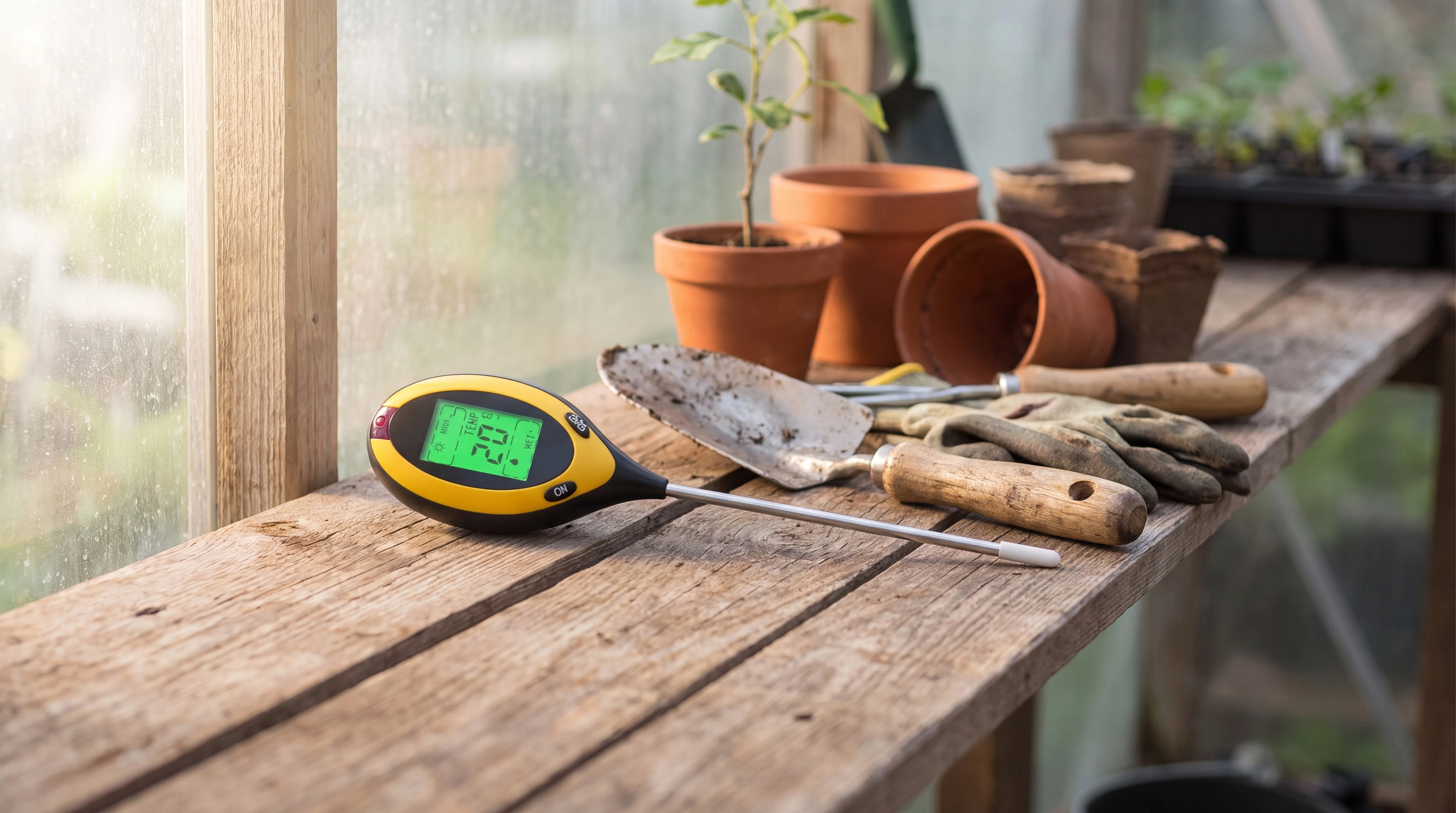
My Verdict, One Gardener to Another
Weigh it against one dead hydrangea and a wasted bag of compost and the decision rather makes itself. SoilSentry answers all four of the questions that actually decide whether a plant lives — water, pH, warmth and light — for less than any other tester we compared, with more verified buyers behind it than the rest of the list combined, and a full month to change your mind. The fern's replacement, for the record, is thriving: it turned out to need far less water than I'd been giving its predecessor, and I only know that because a probe told me so.
One honest caveat, because I promised to write this the way I'd say it over the fence: the half-price offer is promotional, not standard. The brand can withdraw the 50% discount at any time without notice, and stock at our last check was limited. The linked offer page is always the current source of truth — if you still see the discounted price when you click through, the offer is still live.
If your garden sounds anything like mine did, do what finally worked for me: order SoilSentry from the official website while the 50% discount is still active, spend one watering round reading instead of guessing, and let the plants deliver the verdict.